The "Perfect" Daily Routine According to Dr. Huberman
 Kian6 min read
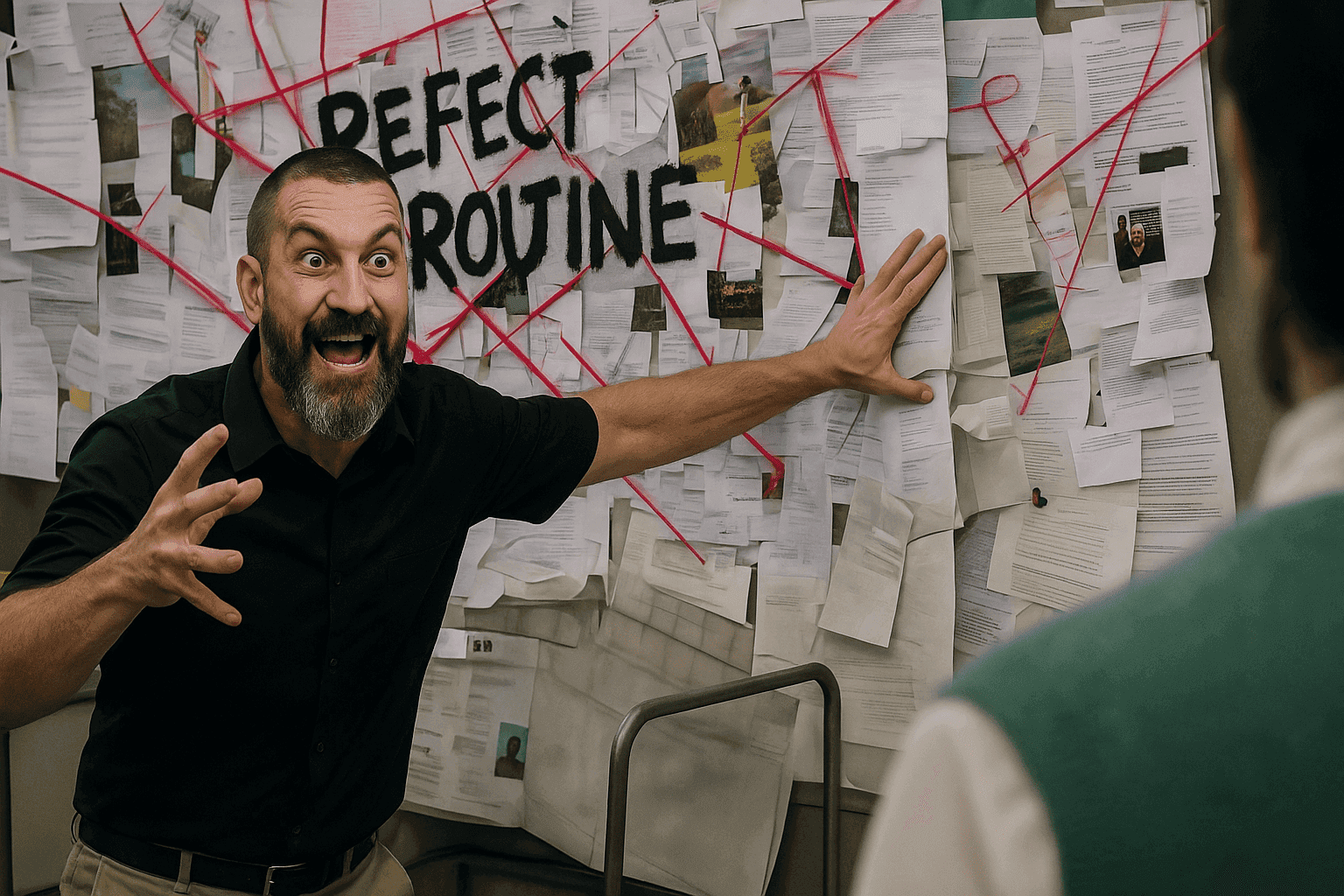
You know those "perfect day" posts that make you feel like a slug? Dr. Andrew Huberman actually lives one and he's got the science to back it up. From the moment he wakes up to the second he (finally) drifts off, every move he makes taps into our natural 24-hour biology. Here's a less wanky, more practical guide to hacking your day, courtesy of a Stanford neurobiology professor who actually tested this stuff on himself.
Morning: Hack your brain's alarm clock
Log your wake time
Jot down the exact minute you open your eyes (usually ~6:00-6:30 a.m.). Why? You're tracking your temperature minimum: a biological low point that happens ~2 hours before you wake. This helps predict your daily energy peaks and focus windows with shocking accuracy.Go for a walk (seriously, outside)
Forward ambulation (aka walking) + sunlight = the ultimate mood and focus primer. That optic flow (trees zooming past) chills your amygdala - the brain's anxiety center - while sunlight hits your melanopsin cells, triggering a cortisol pulse. This combo literally kicks off your circadian rhythm. 🚶♂️☀️Hydrate with electrolytes
Your neurons run on sodium, potassium, and magnesium. Add ~½ tsp of sea salt to your morning water to reboot your nervous system post-sleep.Delay your coffee fix
Slam caffeine too early and you'll block adenosine (the sleep molecule) before it's had a chance to clear naturally - hello 3 p.m. crash. Wait 90-120 minutes for a smoother energy curve.Fast until late morning
Skipping breakfast isn't just trendy, it's functional. Mild fasting raises adrenaline (epinephrine) just enough to sharpen focus without stress. Bonus: it boosts dopamine, your brain's motivation molecule.
Deep work: Respect the 90-minute ultradian cycle ⏱️
Set a 90-minute timer
Your brain operates in ultradian rhythms: waves of high and low alertness. Carve out a "tunnel" of deep work: no texts, no Slack, just 90 minutes of monk-like focus.Eye-level setup
Your eyelid position affects alertness. Screens too low make you sleepy. Keep it at or slightly above eye level to trigger brainstem neurons linked to wakefulness.Low-level white noise
Random, structureless white noise enhances memory retention and masks distractions. No ocean sounds, no lo-fi beats, just the static stuff.Bonus timing tip
Your peak focus lands 4-6 hours after your temperature minimum. Wake at 7 a.m.? Prime time is 11 a.m.-1 p.m. Ride that thermal wave.
Midday: Move, fuel, repeat
- Exercise right after work:
- Strength: 80% submaximal effort, 20% to failure
- Endurance: 80% steady, 20% lactate threshold
Alternate between these two. Keep it under 60 minutes to avoid frying your brain with excess cortisol.
Eat your first meal (finally) 🍽️
Protein + veg = default. Add starch (rice, oats, bread) only if you've trained. Otherwise, skip the carbs to avoid serotonin-induced drowsiness.Mood fuel: Omega-3s
Around 1,000 mg of EPA per day has legit antidepressant effects. That's not blogger bro science, that's peer-reviewed data.Walk after eating (5-30 min)
Post-meal walks supercharge metabolism and regulate blood sugar. Bonus: sunlight = more circadian signals to your brain. More light = better sleep later.
Afternoon: Protect your night with light 💡
- Get outdoor light around 4 p.m.
This isn't some weird hippie trick, late afternoon sunlight desensitizes your retinas, reducing the damage from artificial light at night. Translation: you can still watch Netflix at 9 p.m. without nuking your melatonin.
Evening: Wind down like a neurobiologist 🧠
Dinner = sleep prep
Mix starchy carbs with light protein (pasta + chicken, rice + eggs). Carbs trigger serotonin, which later becomes melatonin: your sleep hormone.Keep your bedroom cool & dark
Ideal temp? 18-20°C. Why? Dropping your core body temp by 1-3°C is key to falling and staying asleep. Darkness signals the pineal gland to release melatonin. No light = no fight with your biology.Sleep supplements (optional but nerd-approved):
- Magnesium threonate/glycinate (300-400 mg)
- boosts GABA, reduces overthinking.
- Apigenin (50 mg)
- from chamomile; shuts down rumination loops.
- Theanine (100-200 mg)
- boosts GABA and chloride channels. Calms the nervous system.
Take these 30-60 minutes before bed. No zombie hangover, just smooth landing.
- boosts GABA and chloride channels. Calms the nervous system.
- Magnesium threonate/glycinate (300-400 mg)
Hot shower or sauna hack
This sounds backward, but heating your body pre-bed actually cools you down faster afterward. That temp drop is your biological "go" signal for sleep. 🛁Pro tip if you wake at 3 a.m.
You probably fought off an early melatonin surge by staying up. Solution? Try sleeping earlier. Also, if you need to get up, keep lights dim and avoid blue light to prevent dopamine disruption.
Putting it all together
Dr. Huberman's routine isn't magic, it's just basic neuroscience done right. Light, movement, temperature, and timing: these are your four control dials. You don't need monk discipline or 20-step morning rituals. You just need to listen to your biology and nudge it in the right direction. ✨
Tweak. Test. Track. No gimmicks, just real, science-backed upgrades to make your day feel a little less chaotic and a lot more optimal.