Why you fail to build habits (And how to fix it)
 Bipu5 min read
Ever set a New Year’s resolution only to abandon it faster than a gym membership in February? You’re not alone. Studies show that 80% of resolutions fail by February, and the reason isn’t a lack of willpower, it’s a broken system of habit formation.
Building habits isn’t about forcing discipline; it’s about engineering a system that works for you. In this post, we’ll break down the top reasons why habits fail, what the research says about it, and how you can finally stick to habits that last.
1. You rely too much on motivation
Motivation is like a bad ex, it’s exciting at first, but you can’t count on it to stick around.
The science behind it
Motivation fluctuates due to something called the Motivation Wave, a term coined by BJ Fogg, a Stanford behavioral scientist. His research shows that when motivation is high, we take on big changes, but as it dips (which it inevitably will), we struggle to keep up.
Example
You wake up feeling inspired to start running. You buy new shoes, wake up at 5 AM, and run 5 miles. By day three, your motivation dips, and suddenly, the bed is way more attractive than the track. Sound familiar?
How to fix it
Design a system, not just a goal. Instead of relying on motivation, reduce the effort needed to start the habit.
✅ Make it ridiculously easy: Commit to just putting on running shoes and stepping outside. If you feel like running, great. If not, at least you took a small step.
✅ Use habit stacking: Attach the habit to an existing routine (e.g., “After I brush my teeth, I’ll do 10 squats”).
2. You set unrealistic expectations
Let’s be real, trying to go from zero push-ups to 100 a day is like trying to deadlift a car on your first gym session.
The science behind it
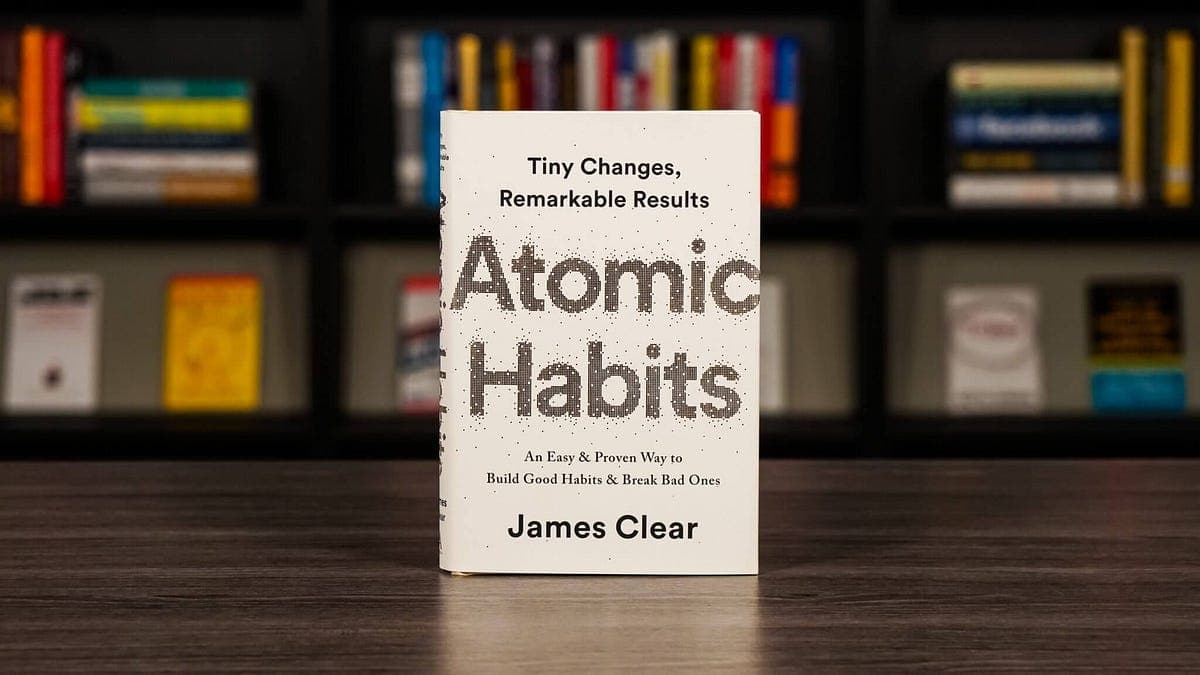
James Clear, in Atomic Habits, explains that habits should be easy enough to do on your worst day. If your habit is too ambitious, you’ll burn out before you see results.
Example
You decide to read one book a week but quickly realize you have zero time for that. After missing a few days, you abandon reading altogether.
How to fix it
Lower the barrier to entry.
✅ Start stupid small: Read one page a day. Do one push-up. Meditate for 30 seconds.
✅ The Two-Minute rule: Make the habit so easy that you can’t fail. “Want to start running? Just put on your shoes.”
🔗 Watch this: James Clear on How to Build Atomic Habits
3. You don’t track progress
If you’re not tracking it, you’re guessing, and humans are terrible at guessing progress.
The science behind it
A study from the American Psychological Association found that people who track their progress are more likely to achieve their goals. Seeing progress releases dopamine, which keeps you hooked.
Example
You commit to drinking more water but have no way to track it. By the end of the day, you think you drank enough, but did you? No idea.
How to fix it
✅ Use habit trackers: Apps like Habitica, Streaks, or even a simple calendar can help.
✅ Create a visual cue: Keep a habit jar. Every time you complete a habit, drop a bead in.
🔗 Check out this video: How Tracking Your Habits Can Change Your Life
4. You let one bad day ruin everything
You miss one workout, and suddenly, it’s “Welp, might as well eat this whole pizza.”
The science behind it
This is the What-the-Hell Effect, a psychological phenomenon where one slip-up leads to completely abandoning the goal.
Example
You break your daily Duolingo streak, and instead of restarting, you ghost Spanish forever.
How to fix it
✅ Use the “Never miss twice” rule: Missing one day is a mistake; missing two is a habit breaker. Get back on track immediately.
✅ Reframe the failure: Think, "How can I adjust and move forward?" rather than, "I failed, so I should quit."
5. You try to do too much at once
Trying to overhaul your entire life overnight? That’s a first-class ticket to burnout.
The science behind It
Willpower is a finite resource (Baumeister et al., 1998). If you try to build too many habits at once, you drain your energy and fail at all of them.
Example
You try to eat healthy, start meditating, work out daily, and wake up at 5 AM, all in one week. By week two, you're back to Netflix and potato chips.
How to fix it
✅ One habit at a time: Start with one small habit, master it, and then layer on more.
✅ Make it automatic: The goal is for the habit to become effortless before adding another.
🔗 Watch this: Why Willpower Alone Won't Work
Final thoughts: build habits that stick
Changing your habits isn’t about superhuman discipline, it’s about removing friction, setting realistic goals, and designing a system that works for you.
🚀 Key takeaways:
✔ Stop relying on motivation, build a system instead.
✔ Start with small, stupidly easy habits.
✔ Track your progress for that dopamine boost.
✔ If you miss a day, never miss twice.
✔ Focus on one habit at a time to avoid burnout.
✔ Fix your environment, make good habits the default option.
If you found this helpful, share it with someone who keeps quitting their habits (we all know that person! 😉).